Laboratory Quality and Compliance
Practical guidance on laboratory quality, compliance, accreditation, and everyday processes that help diagnostic laboratories deliver accurate, reliable, and traceable results.
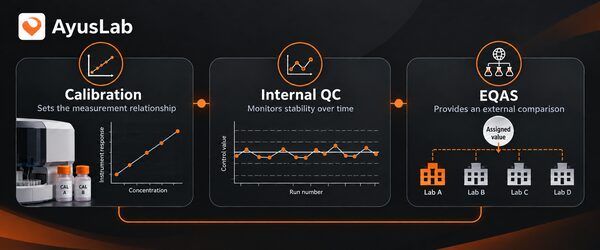
Internal Quality Control in a Diagnostic Laboratory: The Exact Daily Process
Learn how diagnostic laboratories run internal QC on analysers, receive QC results through interfacing, respond to failures and document corrective action and CAPA.
·
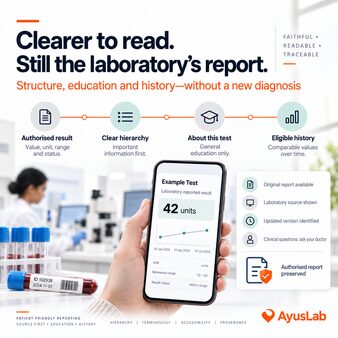
Making laboratory reports easier for patients to understand safely
Learn how to make laboratory reports easier for patients to understand through clear structure, accurate result presentation, accessible design and approved education without adding diagnosis or treatment advice.
·
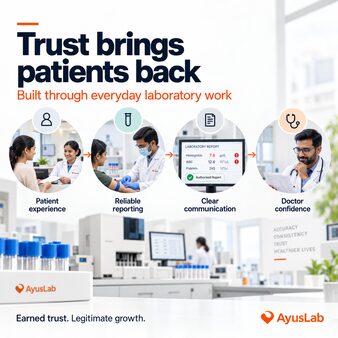
How diagnostic laboratories build trust and earn repeat visits
Building trust with patients and referring physicians is essential for accelerating diagnostic laboratory growth. By focusing on sample collection, proactive communication, rapid turnaround times, and accuracy, you can elevate your service standards and drive long-term business success.
·
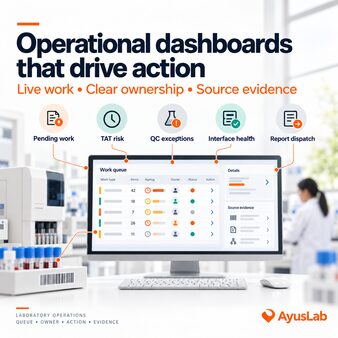
Operational dashboards that laboratory managers can act on
Learn how to design actionable laboratory dashboards that highlight pending work, TAT risks, quality exceptions and interface issues with clear ownership, escalation and drill-down visibility.
·
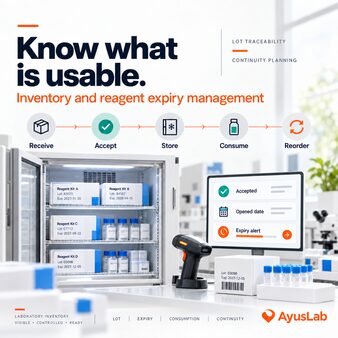
Inventory and reagent expiry management for uninterrupted testing
Learn how laboratories can manage reagent inventory, expiry and stock levels by tracking lots, storage, consumption and alerts to prevent shortages and support uninterrupted testing.
·
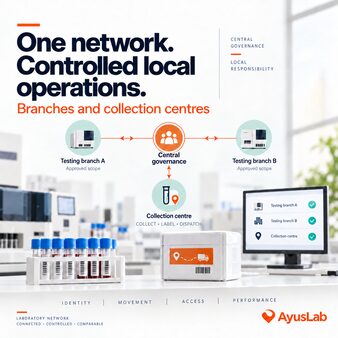
Managing multiple branches and collection centres
Learn how to manage multiple laboratory branches and collection centres with shared governance, connected workflows, controlled local differences, and complete sample traceability across locations.
·
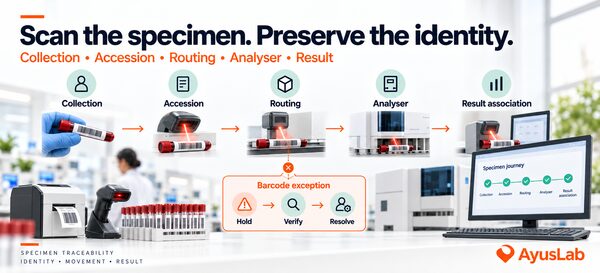
Barcode-based workflows from collection to analyser
Learn how barcode-based workflows connect patient orders, specimens, analyser worklists and results while maintaining identity checks, exception handling and complete traceability.
·
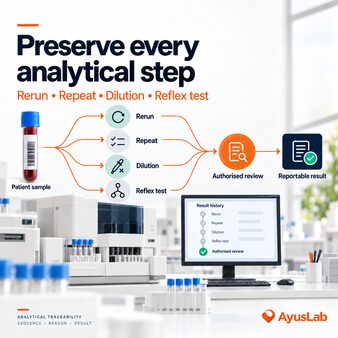
Managing reruns, repeats, dilutions and reflex testing
Learn how to manage reruns, repeats, dilutions and reflex testing by tracking each analytical event, trigger, result and authorisation while preserving a clear reportable result.
·
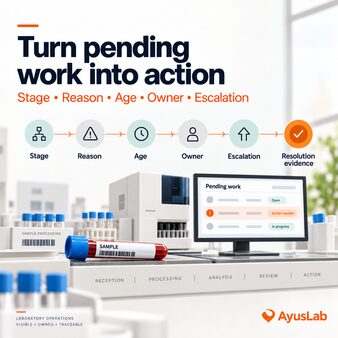
Designing an effective pending work and exception management process
Learn how laboratories can manage pending work and exceptions by tracking workflow stage, reason, age, ownership and escalation to support timely resolution and better operational control.
·
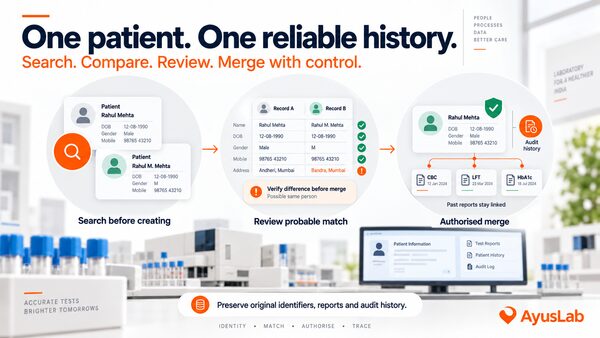
Reducing duplicate patient records in a laboratory
Learn how to reduce duplicate patient records by improving identity capture, patient search, probable-match alerts, controlled merging, and audit trails while preserving complete patient history.
·
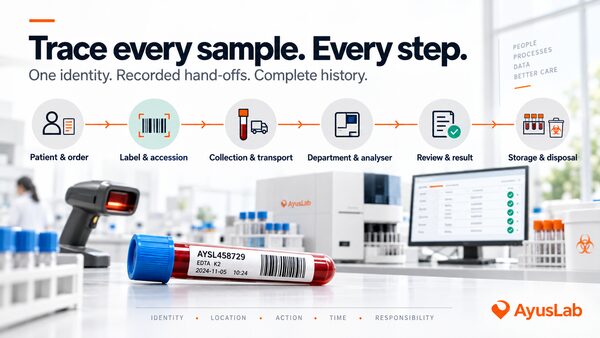
Building end-to-end sample traceability
Understand how end-to-end sample traceability connects patient, order, specimen, barcode, workflow events, results and final disposition. A LIMS can support this process by linking identifiers, timestamps, hand-offs and audit records for better visibility and traceability.
·
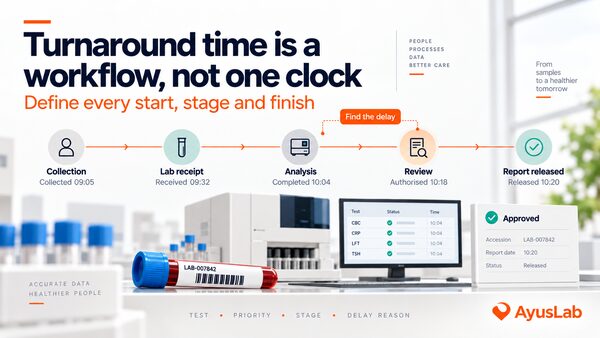
How to define and manage turnaround time by test and workflow stage
Understand how laboratories can define meaningful TAT, track each workflow stage, identify delays and use LIMS visibility to support timely and measurable improvement.
·